
What Are Leadership Weaknesses? What Are The Different Types Of Leadership Weaknesses?

Leadership weakness is mostly described as a personality flaw, almost like a bad habit that annoys a team and then fades into the background. In an actual business, weak leadership is more of an operational drag.
It slows decisions, muddies accountability, weakens trust, and makes ordinary execution more expensive than it should be. Teams do not always collapse in dramatic ways. More often, they lose clarity first, then pace, then confidence.
Leadership weaknesses are not only about whether a manager feels distant, critical, controlling, or unclear. They are about how those behaviors affect workflow, retention, development, and business stability over time.
Once a leader’s habits start shaping how people communicate, escalate, and make decisions, the issue stops being a style problem. It becomes a performance problem, and eventually a financial one.
Why Leadership Weaknesses Become a Business Risk
A weak leader rarely damages a company through one spectacular mistake. The damage is usually quieter than that. Teams start double-checking everything because expectations are vague.
Managers insert themselves into routine work because delegation feels risky to them. Meetings multiply, but clarity does not. Also, rework climbs, and small delays begin stacking on top of one another. From the outside, the organization may still look busy and functional. Inside, though, decision quality is slipping, and trust is getting thinner.
Not every leadership weakness carries the same business cost. Some create slow cultural fatigue, which matters but builds over time. Others hit the business model much faster. Micromanagement chokes execution. Integrity gaps weaken credibility in ways that spread into retention, conflict handling, and client communication.
Poor feedback systems stall capability development, which means good employees plateau, disengage, or leave. A serious article on leadership weakness should not only list traits. It should explain which ones become expensive first and why.
Different Types Of Leadership Weaknesses
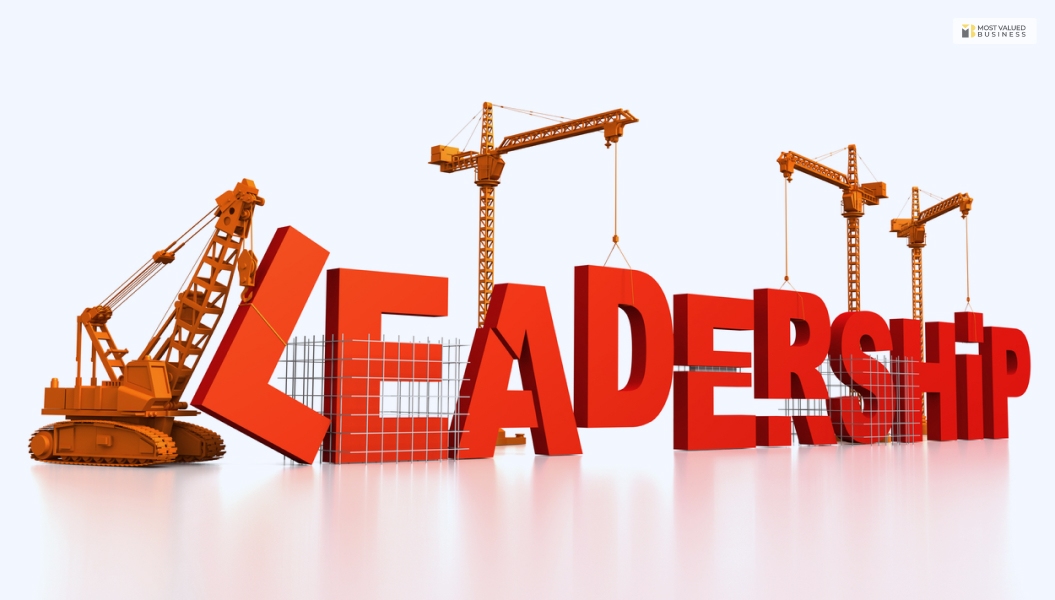
It is normal for a leader to lack a specific skill. However, the weaknesses of a leader can lead to different specific styles of leadership. There are different leadership weaknesses, like a lack of trust or being overly critical of their teammates are some of the common weaknesses some leaders have.
Here is a demonstration of the different leadership weaknesses leaders of today need to overcome to be better leaders of their teams and their organizations.
1. Trying To Stand Apart From A Team

Some leaders often stand apart from their teams to show they are above them. This is one of the leadership weaknesses many team leaders possess. They appear arrogant, and their actions show how unconcerned they are about their teams.
Employees often want to know if their leaders are on their side or not. They want to see if their leaders care or value their contributions. However, if a leader separates themselves from the team, it can risk employee distress and causes a lack of trust among the employees.
2. Overly Critical Leaders

Sometimes leaders are overly critical or judgmental, which creates an unhealthy environment for the employee to work in. Yes, employees do need correction or criticism from time to time. But that needs to be constructive and not come as a constant attack.
One of the leadership weaknesses is feeling that some work or discipline aspects of a team leader might require correction. This can cause the employee working under the leader to feel burned out, disrespectful to their managers, and lack motivation.
Although the leader might feel that they are offering constant criticism, they do not know their weakness unless they see it from the teammate’s perspective. Also, constant criticism often makes teammates feel like they should find other workplaces.
Also read: What Is A Situational Leadership Model? Characteristics, Pros & Cons
3. Micromanagement Of Employees

Micromanagement at the workplace has been a popular ‘talk of the office.’ Whether you are opening LinkedIn or Instagram, there is always some millennial sharing reels about micromanagement in the workplace.
Some managers believe that they need to keep monitoring every step of their employees – whether they are doing their daily or, spending time on smoke breaks, or gossiping in the cafeteria. Leaders with a leadership weaknesses often micromanage their teammates. They also show a lack of confidence in their team’s abilities, leading to often questioning their skills.
When leaders constantly micromanage their employees, they create a lack of trust among employees and break their motivation for work.
4. Constant Communication

Another leadership weakness is the need to require constant communication with the team. Yes, we do have technology, and it is now easier to track employee activities than ever.
However, if a leader is constantly checking up on their employees, they are showing their intent to be in constant control. When employees constantly keep feeling like they are being controlled, it causes resentment and a breach of trust among employees.
5. Acting Without Integrity

Honestly and integrity are the essential qualities of a leader. That is why a leader needs to have honesty and integrity as their qualities. When they are being dishonest or show a lack of integrity during any communication, it may have a lasting effect on the team.
Also, dishonesty and lack of respect can cause teammates to lose respect for who their team leaders are and what they stand for.
6. Failing To Set Clear Expectations

One of the leadership weaknesses is failing to set clear expectations. When a leader fails to set clear expectations about their teammate’s responsibilities and goals, they become unable to complete their goals.
Failing to set clear expectations about clear expectations for the teammates or setting boundaries leads to misunderstanding. This makes it difficult for the team to meet their own objectives and makes them less productive and confused.
7. Providing Useless Feedback

A leader’s feedback must help their teammates to improve their performance. If there was a one-on-one meeting with your teammate, and you did not provide them with any constructive criticism, then there was no point in that meeting.
Also, when providing feedback during a meeting, a leader must communicate the details of an employee’s performance. They should talk about why performance was outstanding or how an employee can excel in their potential.
Also, team leaders need to follow a schedule regarding when to evaluate their teammates’ performance. The employees will know when their performance needs a check and improvement when the team leads have an evaluation process in place. This will help both the team leads, and teammates check employee performance.
Leadership Weaknesses and Their Business Fallout
| Leadership Weakness | What It Looks Like in Daily Work | What It Does to the Business | What Stronger Leadership Looks Like |
| Distancing from the team | The leader stays above the work, shows little concern, and rarely shares context | Trust weakens, communication becomes cautious, and team morale drops | Visibility, context-sharing, and active support without over-familiarity |
| Overly critical behavior | Feedback feels constant, personal, or demoralizing | Initiative shrinks, burnout rises, and capable employees stop taking smart risks | Constructive feedback tied to performance, standards, and development |
| Micromanagement | Every action needs approval, small decisions move upward, and autonomy disappears | Execution slows, labor costs rise, and team confidence erodes | Clear delegation, role trust, and outcome-based accountability |
| Control disguised as communication | Excessive check-ins, surveillance behavior, and constant status chasing | Employees feel monitored, not led, which creates resentment and decision fatigue | Purposeful communication with defined check-in rhythms |
| Lack of integrity | Inconsistent standards, selective honesty, or values that shift with pressure | Credibility collapses, conflict rises, and leadership authority becomes fragile | Consistent standards, transparent communication, and ethical follow-through |
| Unclear expectations | Goals, priorities, and ownership remain fuzzy | Rework increases, deadlines slip, and accountability becomes difficult to enforce | Specific expectations, role clarity, and measurable outcomes |
| Weak feedback systems | Feedback is vague, late, or unhelpful | Growth stalls, frustration builds, and performance problems stay unresolved | Timely, specific, and actionable feedback with follow-up |
The Early Warning Signs Leaders Usually Miss
Most weak leadership gets tolerated far longer than it should because the first signs do not look dramatic. They look administrative, almost harmless at first glance. Approval chains become longer. Routine questions keep moving upward instead of getting solved at the right level.
Moreover, strong employees stop offering candid pushback because they assume it will not matter. Managers start correcting visible activity instead of judging meaningful outcomes. None of these signals sounds catastrophic on its own. Together, they reveal that trust, authority, and performance management are already slipping.
A few signs are especially telling, and they deserve to be named clearly because they show up before formal performance issues do.
- Decisions are delayed even when the information is already available.
- Team members ask for permission on matters that they should own.
- Meetings increase, but fewer clear decisions come out of them.
- High performers go quieter, more careful, and less inventive over time.
These signals matter because they reveal whether the problem is a teachable weakness or a structural failure in the way leadership has been set up. A manager can improve poor feedback habits. Also, a company can tighten decision rights and clarify expectations.
But if every leadership failure keeps getting treated as a personality issue, the organization ends up coaching around a system problem. That wastes time, protects the behavior that caused the slowdown, and leaves the team carrying the cost.
What Weak Leadership Costs a Company
This is the section the article currently needs most. Weak leadership is not only a morale issue. It raises the cost of getting ordinary work done. Employees spend more time aligning, re-explaining, waiting for approvals, and adjusting to inconsistent expectations. That means labor cost rises without a matching gain in output.
Hiring costs can rise, too, when avoidable turnover starts pulling experienced contributors out of the business. Revenue pressure can follow, especially when customer-facing teams work under unclear authority or uneven standards.
Some of the highest costs are indirect, which is exactly why they are so often ignored. A critical manager suppresses initiative, so fewer problems get solved early.
For instance, an unclear manager increases error rates, which leads to rework, slower delivery, and avoidable customer frustration. Also, an insecure manager may hoard decisions, creating bottlenecks that delay launches and weaken cross-functional execution.
On paper, these may look like separate operational problems. In practice, many of them trace back to weak leadership habits that the business normalized for too long.
Cost Map of Weak Leadership
| Cost Area | What Usually Happens | Why It Matters |
| Productivity | Teams duplicate work, seek extra approvals, and spend more time aligning | Labor cost per unit of output increases |
| Retention | Strong contributors disengage or leave after prolonged friction | Replacement cost, slower ramp-up, and knowledge loss follow |
| Customer Delivery | Decisions become inconsistent, and handoffs become slower | Service quality weakens, and client confidence becomes less stable |
| Strategy Execution | Managers make decisions or create dependency around themselves | Launches slow down, and growth windows can be missed |
How To Fix Weak Leadership Weaknesses?

Leadership weaknesses are way more common than you think. Even when you realize some of these leadership weaknesses, don’t consider yourself hopeless. Fixing them is not impossible.
Here are some of the ways in which you can fix your leadership weaknesses to ensure a positive difference in yourself and your team.
Give Your Employees Enough Credit
Put yourself in the shoes of your employees. Imagine working for hours, and then your leader just comes and takes away all the credit? Does it sound very appealing to you? Would you ever wish to work under a leader like that? If not, how can you expect others to work under you?
As a leader, your wellness does not imply that your team is well. Just a small bit of recognition goes a long way. So, a leader must have a track record of who is working and how much and give them their deserved credit for the amount of work they put in.
Trust Your Employees
Unless you have hired all your employees for useless reasons, you need to trust them with the work. Your employees work with you because they are smart and are pretty capable of doing their work. So, trust them with it.
If at all anyone breaks your trust, communicate and sort things out.
Encourage People To Take A Break

For any organization, getting the work done on time is the ultimate deal. How and when one does it is not something a leader should be concerned about. People have a life beyond their laptops and desktops. Plus, everyone does need a break sometimes.
No matter how much one enjoys their work, it gets monotonous at times. So, as a good leader, it is your responsibility to allow them to take breaks to freshen up their mind.
Have An Open Conversation About Compensation
As a leader, you must be prepared to talk to the employees about their compensation. This can go in two ways. Either you have to fight for them to get them the compensation they deserve. Or, you can talk with them about the reasons for the compensation they get.
Share Reasonings For Newer Hires Or Promotions
This one is a bit complicated as “wrong” is subjective. What the employees consider as bad leadership may not be bad in a different opinion. But, if you ensure that every employee gets an equal opportunity for promotion, you will be called a good boss.
When you hire or promote someone, it is a healthy practice to discuss with your team the reasons behind it.
Own Decisions Between Clients And Employees
Is the client always right? Or, are your employees always right? The truth is both parties cannot always be right. One of them has to be wrong, depending on the situation. The best way to solve this problem is through communication.
As a leader, you cannot always side with the client. Your employees need your support when they feel that the client is doing them wrong. On the other hand, you cannot always back your employees. This will create a bad impression of your team in front of your clients. So, the trait of a good leader is to take the middle ground and make fair decisions.
Fixing Leadership Weaknesses Requires Operating Discipline
Fixing leadership weakness is not about telling managers to be nicer, more inspiring, or more approachable in a vague, motivational way. That kind of advice sounds pleasant and rarely changes much. The work is more concrete than that.
- Decision rights need to be clearer.
- Feedback needs a repeatable cadence.
- Performance standards have to be specific enough that teams can act without guessing.
- Recognition should connect to actual contribution.
Once those basics are in place, leadership improvement stops sounding soft and starts looking like real managerial discipline.
The repair plan also has to match the weakness. A leader who overcorrects every detail does not need more meetings. That leader needs cleaner delegation boundaries and clearer definitions of what must be reviewed versus what should be trusted.
Meanwhile, a leader who withholds clarity does not need better slogans. That leader needs tighter role definitions and more precise performance criteria. Generic fixes often make leadership content sound polished, but they do not solve the actual mechanism behind the failure.
Weak Leadership Becomes Expensive Long Before It Becomes Obvious
Leadership weakness does not stay contained inside one manager’s style for very long. It leaks into execution, hiring, retention, and client confidence. That is the real takeaway.
Businesses do not usually lose momentum because one leader is imperfect. They lose momentum because the weakness is ignored until it becomes part of the operating environment. By that point, teams have already adapted in costly ways, and the business is paying for the behavior even if it has not named the source properly.
The stronger conclusion is simple. Leadership should not be judged only by tone, presence, or charisma. It should be judged by the clarity, trust, decision quality, and business movement it creates around itself.
Once that standard is applied, weak leadership becomes easier to spot and harder to excuse. More importantly, it becomes easier to fix because the conversation shifts from personality to performance, which is exactly where serious leadership analysis belongs.
Bottom Line
There are different ways to reduce leadership weaknesses and improve one’s leadership skills. A leader can improve by first acknowledging their weaknesses and identifying them. Then they can implement different improvement strategies and ask their teams for feedback. As a team lead, you must adjust your work and strategies to align with your teams. We have also provided different leadership strengths that a leader needs to acquire to improve themselves.
I hope you learned about leadership weaknesses from this article. However, if you need us to explain more on this topic, you can let us know through the comment section. Thank you for reading.
Frequently Asked Questions (FAQs)
The most common leadership weaknesses usually involve:
1. Trust
2. Clarity
3. Feedback
4. Judgment.
In general, the pattern changes from one workplace to another. However, the deeper problem is usually the same. The leader is creating friction where the team needs direction and steadiness.
Micromanagement and unclear expectations tend to damage performance the fastest. This is because they interfere with work at the point of execution. When people cannot act without approval, cycle time slows down almost immediately.
Also, when ownership is unclear, the same work gets revised, repeated, or delayed. That creates labor waste, frustration, and weaker accountability all at once. Integrity issues can be just as serious.
Yes, in many cases they can. However, they only work when the weakness is acknowledged clearly and tied to specific operating behaviors. For instance, a manager might improve delegation, feedback, clarity, and communication patterns if expectations are made concrete and follow-up is consistent.
What usually fails is vague coaching that talks about attitude without changing role design, decision ownership, or performance standards. When the weakness is structural, and the business keeps treating it as a personality issue, improvement tends to stall.
Read Also:
- Democratic Leadership: Features, Pros and Cons
- Servant Leadership: An Exceptional Leadership Strategy
- What Is Laissez Faire Leadership In Business?
- 10 Leadership Goals That Will Help Your Business Reach Sky Highs!
- Shared Leadership: Characteristics, Benefits, Challenges [Tips & Tricks]
- What Is Delegating Leadership? Here Are Some Helpful Tips
tags
Soumava Goswami
Soumava Goswami is a Content Strategist with 7+ years of experience in creating and strategizing helpful and user-focused content across business, marketing, leadership, and finance. With a strong background in literature and philosophy, Soumava uses memorable characters, narratives, and timeless ideas to make complex corporate concepts easier to understand. Inspired by The Social Network and shaped by his experience with a small MarTech company, he enjoys studying successful businesses. Also, he translates their strategies into practical guidance on leadership, decision-making, customer feedback, operations, and sustainable growth. LinkedIn


