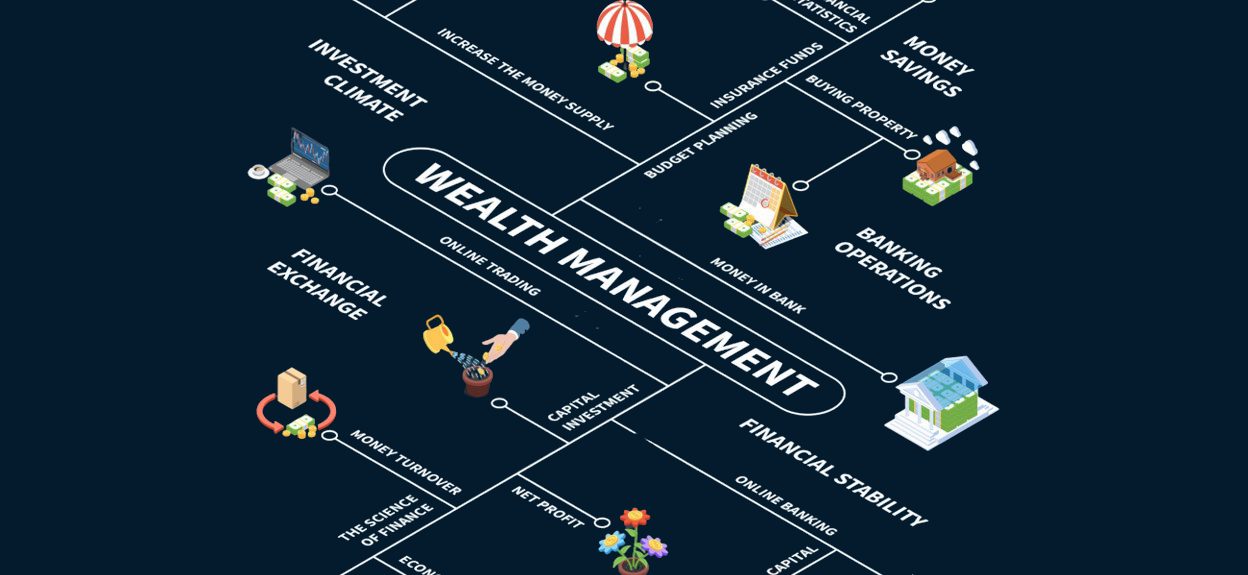
An Overview of Wealth Management and Effective Strategies

Wealth management is not just portfolio returns with a nicer label. Instead, it sits at the intersection of investment, tax, and legacy planning. Also, it demands technical rigor plus practical judgment.
For affluent households, the real challenge rarely comes from “finding the best fund.” Rather, it comes from coordinating decisions so
- Taxes do not quietly compound
- Liquidity does not break at the worst moment
- Family dynamics do not hijack the plan.
Consequently, wealth management works best as a system, not a product. This is because each choice affects the after-tax, after-fee, real-world outcome.
Moreover, wealth management typically combines personalized financial planning with investment management. Also, it expands into specialized services like retirement planning, philanthropic planning, legal coordination, and estate planning.
Therefore, the job becomes translation as much as analysis. It is about turning complexity into clear decisions, decision rules, and milestones that can actually be tracked. Although technology improves reporting and execution, the work still requires human oversight. This is because households do not behave like spreadsheets when markets get noisy.
The Core Pillars That Hold the Whole Structure Up
The most durable wealth plans start with a few pillars and then build outward.
1. Investment management
It sets the engine through asset allocation, diversification, and rebalancing. This is because concentration risk and sloppy exposure creep in faster than most people expect.
2. Financial Planning
It creates the roadmap, especially for cash flow, retirement income needs, and timing decisions. These mostly matter more than “picking winners.”
3. Tax Planning
It aims to optimize tax efficiency. This is because the same gross return can produce very different net outcomes depending on structure and location.
4. Estate Planning
It handles trusts, wills, and wealth transfer mechanics. Also, it reduces avoidable friction like probate delays or unclear beneficiary intent.
5. Risk Management
It covers insurance, liability exposure, and asset protection strategies. This is because one poorly covered risk can undo a decade of compounding.
6. Behavioral Finance
Emotionally-driven decisions might erode returns over time. So, practical plans add behavioral guardrails, decision rules, and a communication cadence that reduces reactionary moves.
How Wealth Management Actually Works?
Wealth management usually runs as an ongoing cycle rather than a one-time “plan delivery.”
1. Discovery
Typically, the process starts with discovery. It is where the advisor gathers goals, values, constraints, and risk tolerance. This is because risk tolerance sounds stable until it meets real volatility.
2. Data Analysis
Data analysis maps assets, liabilities, income streams, business interests, and concentrated positions. This way, the household can see what it owns and what owns it.
3. Strategy Development
It integrates investment policy, tax optimization, retirement income design, estate structures, and risk coverage into one cohesive roadmap.
4. Implementation
Although it sounds simple, it is not. This is because execution requires coordination with CPAs, attorneys, and internal stakeholders.
5. Monitoring
It keeps the plan alive through rebalancing, tax planning refreshes, and updates for life events.
6. Scenario Planning
Primarily, it strengthens the system here, since running alternate market, tax, and life-event scenarios clarifies trade-offs, surfaces contingency steps, and turns abstract risk into actionable triggers. As a result, the plan stops being an opinion and starts acting like a decision framework.
Types of Wealth Management (and Why the Container Matters)
Not all wealth management looks the same, and the delivery model changes the incentives.
1. General Wealth Management
It mostly comes through large banks or firms and tends to standardize frameworks across a broad client base. This can improve consistency, but sometimes limits customization.
2. Private Wealth Management
It focuses on the needs of high-net-worth and ultra-high-net-worth individuals. It does so when the household faces complex holdings, multiple income streams, and a real estate or business-heavy balance sheet.
3. Independent Advice
It typically offers more tailored solutions. Also, it can reduce product pressure. However, quality varies widely, and due diligence matters.
4. Family Office Services
These act as an operating hub for multi-generational planning. They centralize investment, tax, philanthropic, and lifestyle services. Meanwhile, these also manage concentrated positions and supporting governance structures that survive generations.
Therefore, the “type” matters because it influences coordination bandwidth, conflict management, reporting depth, and the ability to run disciplined governance. Additionally, households with multiple advisors mostly need a quarterback. Otherwise, everyone optimizes one slice, and nobody protects the overall after-tax outcome.
Fees, Fiduciary Standards, and the Quiet Math of “Fee Drag”
Cost structures shape behavior, so fee transparency should never be an afterthought. Many wealth managers charge an annual percentage of assets under management (AUM. This is often cited at around 1%. Also, the rate may decrease as asset size increases.
However, households should look past the headline rate and ask for the following:
- Clear schedules
- Examples of total annual costs
- Conflict disclosures
This is because the real cost includes product expenses, trading friction, and tax impact. Moreover, clients should see projected fee drag over time. This way, they can compare fee models against expected value instead of trusting vague promises.
In practice, three common models show up: AUM-based, fee-only (hourly, flat, or retainer), and commission-based. Consequently, the best model depends on complexity, service needs, and the ability to manage conflicts.
Meanwhile, standards like fiduciary duty versus suitability standards influence incentives and accountability. Hence, governance should include a plain-language explanation of what the advisor must do, what they may do, and how conflicts get disclosed.
Comparison of Financial Roles in a Wealth Ecosystem
| Role | Primary Strength | Best Fit Situations |
| Wealth Manager | Cross-disciplinary coordination; tax and estate integration | Complex estates; multiple advisors; high decision volume |
| Financial Planner | Cash flow structure, goals, household financial roadmap | Building a plan foundation and retirement income design |
| Portfolio Manager | Security selection; tactical allocation; implementation depth | Seeking tactical exposure; managing mandates and constraints |
| Family Office | Consolidated services; multi-generational governance | Ultra-high-net-worth families; complex holdings; succession planning |
What “Good” Wealth Management Usually Includes
If you want to ensure proper wealth management, implement the following strategies:
1. Investment Management: Diversification With Intent
Of course, diversification sounds obvious. Still, many affluent portfolios concentrate unintentionally through employer equity, business interests, and real estate clusters. Also, they might use a single sector theme that overstays its welcome.
Therefore, effective investment management starts with a clear asset allocation that matches time horizon and risk appetite. Then, it uses periodic rebalancing to keep exposures from drifting.
Additionally, global diversification reduces dependence on one domestic cycle. Meanwhile, alternatives such as private equity, private credit, or hedge fund exposures may reduce correlation. However, they introduce liquidity and complexity costs.
However, “alternatives” should never become a status symbol. Instead, they should serve a job in the portfolio, like reducing volatility in a specific scenario or improving expected returns within a risk budget.
Moreover, concentrated positions need deliberate exit planning. This is because taxes, liquidity, and timing collide here. Consequently, portfolios mostly benefit from segmentation. In this case, liquidity buckets, growth buckets, and preservation buckets each carry a clear purpose. This way, the household stops mixing short-term needs with long-term capital.
2. Tax Optimization: Net Returns Beat Gross Returns
Tax planning can add durable value because it compounds quietly. For example, tax-loss harvesting can do the following:
- Offset gains
- Reduce current tax impact
- Help manage the portfolio’s tax profile over time.
Similarly, asset location matters because placing tax-inefficient assets in tax-advantaged accounts might improve net returns without taking additional market risk. Furthermore, ongoing monitoring of regulatory and tax regime changes helps avoid surprises.
This works especially for cross-border reporting, shifting brackets, or rule changes that affect retirement accounts and estate thresholds.
Nevertheless, tax optimization works best when it aligns with the investment policy rather than fighting it. Therefore, the system should define when to harvest losses and realize gains intentionally. Also, it must define how to avoid wash-sale or timing mistakes that dilute the benefit.
In addition, the plan should document decision rules. This is because tax strategy tends to break down during volatile markets, when emotional impulses rise, and the household wants to “do something” fast.
3. Liquidity Planning: The Strategy That Prevents Forced Selling
Liquidity planning sounds boring until it becomes urgent. In fact, forced selling during market stress might permanently damage long-term allocations. This is because it turns volatility into realized loss and locks in regret.
Moreover, deliberate cash buffers and laddered short-term fixed income might reduce the need to liquidate long-term holdings when markets dislocate. Additionally, liquidity planning supports tactical opportunities. This is because dislocations sometimes create attractive entry points, but only households with liquid flexibility can act.
Moreover, liquidity planning should map the timing of liabilities, tax payments, planned purchases, and lifestyle spending. This is because cash flow surprises mostly hit even wealthy households.
Consequently, a good plan identifies –
- “must-pay” commitments
- “could-delay” items
- “optional” spending.
This way, the portfolio might fund needs without constant reshuffling. This structure also makes rebalancing easier, since cash and short-duration holdings fund rebalancing moves without triggering unnecessary taxable events.
4. Risk Management and Insurance: Protecting the Base Layer
Risk management protects the base layer of the wealth structure. This way, it should address life, disability, property, liability, and long-term care considerations where relevant. However, insurance should match risk exposure rather than emotions. This is because over-insuring might drain cash flow, while under-insuring can create catastrophic gaps.
Moreover, coverage reviews should align with net worth changes, business risk shifts, and life events like marriage, children, or ownership transitions. Additionally, asset protection strategies matter for certain profiles. This works particularly for business owners and professionals with higher liability exposure.
Meanwhile, risk management also includes investment risk controls, such as drawdown limits, diversification discipline, and scenario analysis. These test how the plan holds up in inflation spikes, recession conditions, or sharp equity declines.
As a result, the household stops relying on hope and starts relying on preparation. This is not about fear. Rather, it is about ensuring one bad year does not rewrite the whole family narrative.
5. Estate and Legacy Planning: Structure, Not Sentiment
Estate planning often gets delayed because it feels personal, complex, and uncomfortable. Yet, unclear intentions create disputes, and disputes destroy families faster than markets do.
Therefore, estate planning should translate legacy intent into enforceable structures. Some examples are wills, trusts, and beneficiary designations that actually align. Additionally, legacy planning integrates philanthropic goals through tools such as donor-advised funds or foundations. This works particularly when charitable giving also supports tax efficiency.
Moreover, legacy planning includes governance, not just legal documents. Consequently, families benefit from clear roles, meeting cadence, education plans for heirs, and rules for business succession or shared asset decisions.
This is where family governance reduces friction. This is because it puts guardrails around communication and expectations. When governance exists, the transfer process tends to feel deliberate rather than chaotic.
Behavioral Guardrails and Family Governance
Markets test behavior, and behavior tests outcomes. Even high-net-worth households can sabotage themselves through panic selling and performance chasing. Also, they might refuse to rebalance because it “feels wrong.”
Therefore, wealth plans should include behavioral guardrails like rebalancing thresholds, spending policies, and pre-committed decision rules. Additionally, a communication cadence matters. This is because frequent, structured reviews might reduce reactionary moves during volatility. Also, it might keep everyone anchored to a long-term strategy.
Family governance adds another layer, especially when wealth transfers across generations. For example, formal family meetings, advisory boards, and shared education programs build stewardship and reduce entitlement risk.
However, governance should remain practical, not performative. This is because families need clarity on
- Who decides what
- How disagreements get handled
- What happens when someone wants liquidity from a shared asset.
Consequently, a wealth system becomes more resilient when it anticipates human behavior rather than pretending everyone will act rationally.
Advisor Selection and Ongoing Oversight
Qualifications help, yet technical knowledge alone does not keep a plan on track. Certifications such as CFP, CFA, or CIMA signal training depth. Also, relevant education and experience reduce basic errors.
However, soft skills matter as much as credentials. This is because advisors must listen and translate complex ideas into plain language. Also, they must manage family dynamics without inflaming them. Therefore, due diligence should include questions about the following:
- Planning process
- Tax coordination
- Conflict disclosures
- How the advisor handles market stress conversations.
In addition, oversight should not end after onboarding. Consequently, households should maintain a governance file that includes fee schedules, service scope, investment policy statements, rebalancing rules, liquidity targets, and a record of major decisions. This documentation keeps the relationship honest because it turns “trust” into visible accountability.
Moreover, ongoing reviews should focus on progress toward measurable milestones, not just quarterly performance. This is because wealth management is about outcomes across decades, not bragging rights in one year.
Growing, Protecting, and Transferring Wealth
Wealth management works when it behaves like a coordinated operating system. Although investment management drives growth, tax planning protects net returns. Also, liquidity planning prevents forced selling at the worst possible time.
Meanwhile, risk management preserves the base layer. Moreover, estate planning converts intent into a structure that can survive real family pressures. Therefore, the strongest strategies combine technical design with behavioral guardrails and governance. This is because households need discipline more than novelty.
Ultimately, the goal is not complexity for its own sake. Rather, it is clarity that keeps money aligned with life goals, even when markets, taxes, and people change.
Frequently Asked Questions (FAQ)
Wealth management helps in the coordination of the following:
1. Investments
2. Taxes
3. Risk coverage
4. Estate planning
This way, wealth can grow, stay protected, and transfer smoothly.
The following entities benefit most from wealth management services:
1. High-net-worth individuals
2. Executives
3. Business owners with complex assets, tax exposure, and multi-goal planning needs.
Liquidity planning reduces forced selling during volatility by funding short-term needs through cash buffers and short-duration ladders. This way, it preserves long-term allocations.
Fee-only advisors charge transparent fees, while commission-based advisors earn from products or trades. This might create conflicts without strict disclosures.
Behavioral guardrails reduce panic selling and performance chasing. It does so by using pre-set rules, review cadence, and triggers that keep actions aligned with strategy.
Read Also:
tags
Richard Watson
Richard Watson is a dynamic author on finance and business. He lives in New York City. Who has been winning hearts and minds with his 10+ years of experience, expertise, and blogging. With a Bachelor of Arts in Business (BA) & MCA (Master's in Computer Applications), he transforms complex financial concepts into accessible insights that resonate with both seasoned professionals and novices. His notable work has established him as an expert, guiding businesses to thrive in the digital world. He is currently on Content Operations Associate | MoneyOutlined.com & MostValuedBusiness.com