Why Search Optimization Became the Language of Legitimacy

Gone are thedays when you had to print big signs and billboards for branding. Today, you just need to show up on page one. Because today, a single Google search decides whether people believe you are real, relevant, or worth their time. With more than 8.5 billion searches happening every day, search results have quietly replaced referrals, word-of-mouth, and even credentials to some extent. Your existence as a business totally depends on your rank, and if you are not there on the result pages, you’re invisible. This is where SEO stops being a marketing tactic and starts acting like something bigger. Like a credibility engine or a public signal of trust. And whether you like it or not, you’re already being judged by it.
SEO and the Architecture of Credibility
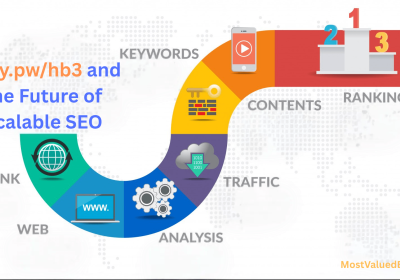
Search Engine Optimisation (SEO) is a simple process that disciplines a structure that decides whether people trust what they see online. SEO is definitely about ranking higher, but it dosent stops there. It is a multilateral process to structure information you present and digital presence in a way that search engines recognize as credible.
Google will prioritize you if you prioritize reliability! And prioritizing redeability come with fast page loading speed, clear page breadcrumbs, and answering real user intent. At the same time, off-page signals like backlinks, brand mentions, and citations act as external validation, proof that others vouch for you.
This is where Google’s E-A-T model comes in. Expertise, Authoritativeness, and Trustworthiness aren’t abstract ideas anymore. They’re measurable indicators baked into how search engines assess legitimacy. In simple terms, SEO doesn’t just place you in results; it constructs the credibility that keeps you there.
From Directories to Digital Authority
Search didn’t always work this way. Early engines like Yahoo and AltaVista depended on manual indexing and basic categorization. Authority was shallow. Visibility was mechanical.
That changed in 1998 when Google introduced PageRank. Hyperlinks play a silent role in building your credibility, becoming something you earned rather than declared. Over time, in Google, algorithm updates named Panda, Penguin, RankBrain, and BERT refined this logic further. Today, search engines evaluate intent apart from the keywords. SEO evolved from optimization into reputation engineering.
Visibility as Modern Legitimacy
Online visibility now replaces traditional endorsements. People don’t ask who recommended a brand; they check where it ranks.
Research published in the Journal of Marketing shows users trust top search results 2.5× more than listings on later pages. That trust forms instantly, even before content is read. When your brand appears repeatedly in relevant, authoritative contexts, users assume expertise by default.
This is why SEO and online reputation management now overlap. Visibility isn’t about vanity metrics anymore. It’s how legitimacy gets established in the digital public square.
Actionable Credibility Builders in SEO
Credibility doesn’t happen accidentally. It’s assembled through consistent, technical, and editorial choices.
Search engines survive by feeding information to users. However, schema markup helps you present your content in snippets, which directly and indirectly reinforce authority at a glance. Long-form content built around low-competition, intent-driven keywords signals depth rather than noise. Meanwhile, engagement data from Google Search Console reveals whether users actually trust what they land on.
Every optimization from metadata clarity to internal linking quietly tells search engines and users the same thing: you belong here.
Ethics, Algorithms, and Authenticity
Modern SEO carries ethical weight. Manipulative shortcuts might deliver short-term visibility, but they erode trust fast. Google’s 2023 spam updates removed roughly 10% of sites using exploitative tactics like keyword stuffing, link schemes, and AI filler content.
Brands that recovered focused on transparency and substance. They disclosed sponsored content properly, audited backlink profiles, and paired automation with editorial oversight. Today, authenticity isn’t just a moral choice. It’s an algorithmic requirement.
Brands that recover focus on quality, transparency, and human oversight:
- Always mark “rel=sponsored” for divisions holding sponsored content.
- Often audit backlinks on your site to wipe out toxic domains junking your site.
- Blend automation with editorial review to maintain substance and voice.
The Future of SEO: AI, Voice Search, and Digital Trust
Search is moving toward intent interpretation at scale. Like how Google builds its own system, Multitask Unified Model (MUM) evaluates content in form. At the same time, the voice search feature continues to rise, pushing SEO toward conversational clarity rather than keyword rigidity.
Zero-click results now dominate over 65% of searches. That means visibility often happens without a website visit. Featured snippets, brand panels, and business profiles become trust signals on their own. SEO is no longer about being clicked. It’s about being recognized as credible before interaction begins.
To stay ahead:
- Optimize your site for better authority with the help of using tools like Frase.io or Surfer SEO.
- Curate content for voice search, which may represent 50% of queries within two years.
- Focus on zero-click visibility featured snippets and Google Business Profiles since 65% of queries now end without a website visit.
The Takeaway: SEO as a Credibility Function
Search results now function like reputation reports. Where you rank reflects not just optimization, but integrity, authority, and consistency.
SEO has moved beyond marketing. It now operates as a credibility system, one that quietly influences how you’re judged before you ever speak. In the eyes of both Google and users, visibility has become the language of legitimacy.
Read Also:
tags
Roman Williams
Roman Williams is a passionate blogger. He loves to share his thoughts, ideas and experiences with the world through blogging. With over 15 years of experience, Roman also enjoys writing blogs in various domains, including business, finance, technology, digital marketing, travel, and sports. Roman Williams is associated with GlobalBusinessDiary & TechRab.