
Understanding the COO Role: Responsibilities and Key Skills for Success

The role of a Chief Operating Officer (COO)? Not just another C-level title. It’s one of the most hands-on, high-pressure roles in a company. You’re basically the bridge between strategy and execution. The second-in-command, but also the one making things actually happen.
While the CEO focuses on vision and external growth, you, as a COO, deal with what’s inside. Like the overall operations, the people or the ongoing Processes. And honestly, things can get messy.
Now here’s the shift. Businesses are getting more complex with faster decisions and tighter margins. Because of that, the demand for skilled COOs is rising. That’s why many professionals are now turning to specialized COO programs or even structured learning paths like the IIM Calcutta COO course. Not just for theory, but for real-world operational thinking.
What Does a COO Do?
So, what does a COO actually handle day to day? At a basic level, you oversee operations. But that sounds too simple. In reality, you’re aligning daily activities with long-term business goals. You’re making sure strategy doesn’t just stay in slides, it gets executed. Here’s where your focus usually goes:
- Operational Oversight: You manage departments. Sales, production, customer service, you name it. Everything needs to run smoothly.
- Process Improvement: You spot inefficiencies. Fix them. Then optimize again. It’s ongoing.
- Team Leadership: You lead teams, but more importantly, you connect them. Silos? You break those.
- Strategic Execution: CEO sets direction. You turn that into action. Step by step.
- Financial Management: Budgets matter. Resource allocation matters more. You ensure money is used wisely.
Think about a retail business. Inventory delays? Supply chain gaps? That lands on you. You fix it. Fast.
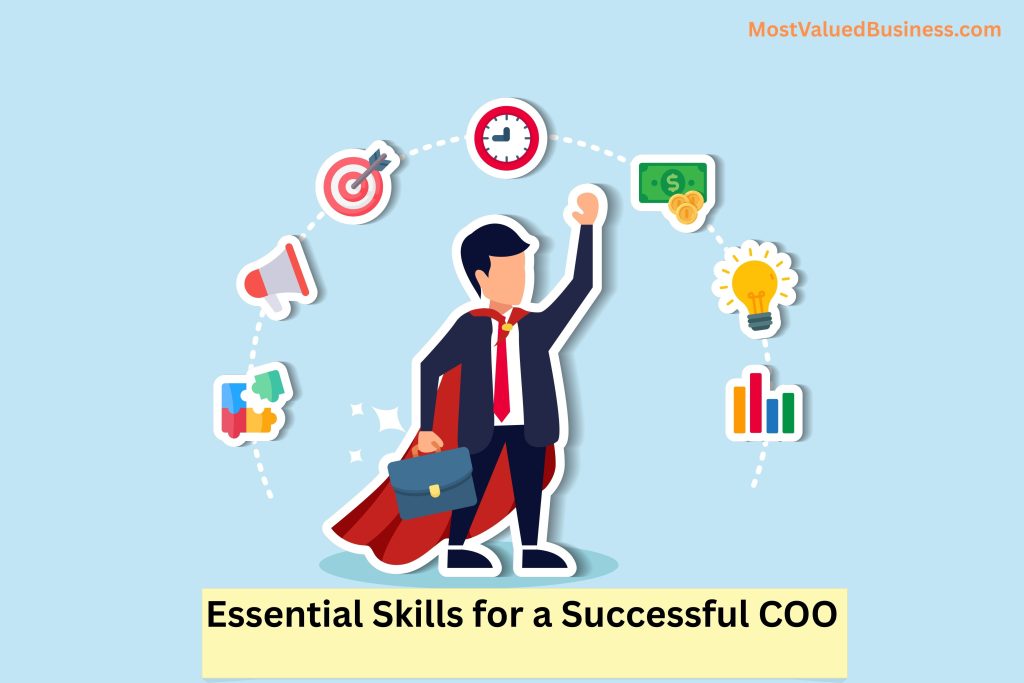
Essential Skills for a Successful COO
Now here’s the thing. You don’t become a COO just by being good at one skill. It’s a mix. A slightly chaotic mix, honestly. Let’s break it down:
- Leadership and People Management Skills: You lead from the front. But also behind the scenes. You build culture. You manage conflicts. You keep teams aligned.
- Strategic Thinking Skills: You don’t just think short-term. You connect operations with long-term goals. Always.
- Analytical Skills: Data matters. A lot. You read it, question it, and then act on it.
- Communication Skills: You talk to everyone. Teams, executives, stakeholders. Clear communication? Non-negotiable.
- Adaptability Skills: Markets shift. Tech evolves. Plans break. You adjust. Quickly.
- Problem-Solving Skills: Problems show up daily. Big ones. Small ones. You solve them before they escalate.
And yeah, many professionals sharpen these skills through COO programs or courses like the IIM Calcutta COO course. Why? Because real case studies hit differently than theory.
Qualifications and Vital Skills for COOs
Becoming a COO isn’t random. You don’t just land here. Most COOs bring a mix of education and experience. Typically, a business degree helps. Many even go for an MBA or similar advanced qualifications. But honestly? Experience carries more weight. Here’s what really matters:
- Strong leadership and team management
- Deep operational understanding
- Strategic thinking (not just execution)
- Decision-making under pressure
- Financial and business acumen
- Clear communication across levels
Also, one key thing you need to understand is how different departments work. Sales, HR, operations, finance. Not in theory. In practice. Because at this level, you don’t manage tasks. You manage systems.
Different COO Types and Their Functions
Not every COO looks the same. That’s the interesting part. The role shifts based on what the company actually needs at that stage. Here are a few common types you’ll notice:
- The Executor COO: This one focuses on execution. Plain and simple. Takes the CEO’s vision and turns it into daily operations. Processes, systems, delivery, everything runs through them.
- The Change Agent COO: Brought in when things aren’t working. Maybe operations are messy. Maybe growth is stuck. This COO fixes inefficiencies, restructures teams, and pushes transformation. Fast.
- The Mentor COO: Usually works alongside a less experienced CEO. Offers guidance. Builds leadership depth. Helps stabilize decision-making across teams.
- The Partner COO: Acts almost like a co-leader. Works closely with the CEO on strategy and execution. Not just operations, but also involved in shaping direction.
So yeah, one title. Multiple versions. Depends on the company’s needs.
Why COO Programs Are Beneficial
You might wonder whether you really need a COO program? Short answer? It helps. A lot. These programs give you structured exposure to operations. Not just concepts. Actual application. Here’s what you gain:
- A deeper understanding of operational management
- Clarity on aligning operations with business goals
- Better leadership skills under pressure
- Access to industry experts and peer networks
Take the IIM Calcutta COO program as an example. It doesn’t just teach. It simulates. Real operational challenges. Real decision-making scenarios. You learn by doing.
Pathway to Becoming a COO
There’s no fixed path here. No straight line. But patterns exist. Most COOs don’t start as COOs. They grow into it. Step by step. Typical path looks something like:
- Start in operations, finance, or management roles
- Move into senior leadership positions
- Gain cross-functional experience
- Lead teams. Then larger teams
- Handle complex projects and decision-making
- Eventually step into executive roles
Over time, you build credibility. You understand how businesses actually run. And that’s what matters. Some professionals also fast-track this journey through structured learning, COO programs, executive courses, and real-world case exposure. Because let’s be real. Experience teaches. But structured learning sharpens.
How COOs Make an Impact
This is where things get real. A strong COO doesn’t just manage operations—they transform them. Here’s how that shows up:
- Streamlining supply chains: Lower costs. Faster delivery. Better efficiency.
- Implementing new technologies: Automation. Tools. Systems that actually improve productivity.
- Building leadership pipelines: You don’t just lead, you create future leaders.
- Improving customer satisfaction: Better processes = better service. Simple.
And the impact? It’s direct. Growth. Profitability. Stability. All tied back to operations.
Comparing the Roles of COO and CEO
People confuse this a lot. COO vs CEO. Sounds similar, but the roles are very different. Here’s the simplest way to see it:
- CEO: Focuses on vision. External relationships. Growth. Big-picture thinking.
- COO: Focuses on execution. Internal operations. Making things work daily.
The CEO decides where the company should go. The COO figures out how to get there. Also, a CEO deals with investors, stakeholders, and market positioning. And a COO works with teams, processes, and internal performance on the counterpart. They work closely. But their focus? Completely different. One sets direction. The other delivers results.
| Aspect | CEO (Chief Executive Officer) | COO (Chief Operating Officer) |
| Core Focus | Vision, growth, and external positioning | Execution, operations, and internal performance |
| Role Nature | Strategic and forward-looking | Tactical and execution-driven |
| Daily Involvement | Less involved in day-to-day operations | Deeply involved in daily business activities |
| External vs Internal | External stakeholders, investors, partnerships | Internal teams, processes, and systems |
| Decision Scope | Long-term direction and big moves | Short-term execution and operational decisions |
| Accountability | Overall company success | Operational efficiency and delivery |
| Reporting Structure | Top authority | Reports to CEO |
Notable COO Case Studies
Now this is where things get real. Because theory is one thing. But actual COOs? They shape companies in ways most people don’t even notice. Let’s look at a few.
A. Sheryl Sandberg (COO of Meta)
You’ve probably heard of her. But here’s the thing, Meta (then Facebook) wasn’t always a money machine. When Sheryl stepped in, she didn’t just “manage operations.” She built the entire advertising model. Structured it. Scaled it. Result? Massive revenue growth. A clear business engine. She didn’t change the vision. She made it work.
B. Tim Cook (COO of Apple before becoming CEO)
Tim Cook spent the major part of his career at Apple as COO. And honestly? Apple needed that. He optimized supply chains. Reduced inventory. Improved manufacturing efficiency globally. During his tenure, Apple had a promising operational backbone. That later on helped the brand achieve global success. Vision was Steve Jobs. But execution? That was Cook.
C. Gwynne Shotwell (COO of SpaceX)
SpaceX is no wonder a sycoon in space research and development in global stage. And most of its credit also goes to Gwynne Shotwell! She’s the one making sure rockets actually launch on time, contracts get delivered, and operations don’t collapse under pressure. She balances engineering ambition with operational discipline. That’s not easy.
D. Jeff Williams (COO of Apple)
Another Apple example, but a different role impact. Jeff Williams focuses heavily on product operations, supply chain, and health initiatives like the Apple Watch. He ensures that innovation doesn’t stay in labs. It reaches customers at scale.
E. Daniel Zhang (COO of Alibaba before CEO)
Alibaba’s growth phase? Messy, fast, massive. Daniel Zhang helped streamline operations, especially during high-volume events like Singles’ Day. Think millions of transactions. In hours, that kind of scale needs operational precision. Not just strategy.
Conclusion
Being a COO isn’t easy. It’s demanding. Fast-paced. Sometimes chaotic. But also? Incredibly rewarding. You lead. You execute. You solve problems that actually move the business forward. And in today’s complex business environment, companies don’t just want COOs, they need them.
So if you’re aiming for this role, it’s not just about experience. It’s about preparation. Structured learning through COO programs or options like the IIM Calcutta COO course can give you that edge. At the end of the day, it comes down to this, can you turn strategy into action? If yes, you’re already thinking like a COO.
Frequently Asked Questions (FAQs)
Not necessarily. It helps, sure. But it’s not mandatory. What actually matters? Experience. Leadership. Decision-making under pressure. You can have degrees and still struggle in operations. Or you can build your way up and thrive.
Good question. Senior managers handle departments. You handle the entire system. You’re not just managing tasks, you’re aligning everything. People, processes, performance. All at once.
Absolutely. It happens a lot. In fact, COOs often make strong CEOs because they understand how the business runs internally. But, big, you’ll need to shift from execution to vision.
Almost all, but especially tech, manufacturing, retail, logistics, and healthcare. Basically, any industry where operations are complex and scale matters.
Short answer? Yes. Long answer? Also yes. You deal with constant problem-solving, tight deadlines, and pressure from both sides, the CEO above, teams below. But if you like solving chaos and turning it into structure, this role fits.
Read Also:
- S Corp Vs C Corp: What Are The Major Differences?
- Who Are The Highest Paid CEOs In The World? – Let’s Find Out
- Delegation Of Authority: Importance In Management
- What Is The Importance Of Leadership Development In Business?
- 6 Tips For Businesses To Maintain Positive Stakeholder Relationships
- What Are The Types Of Corporations In Business? – Let’s Find Out
- What Is Laissez Faire Leadership In Business?
- What Is Remuneration, And How Does Compensation Work For Employees?
- Shared Leadership: Characteristics, Benefits, Challenges [Tips & Tricks]
- Leadership Ethics: Why Is It Important, And How Can It Affect An Organization?
tags
Roman Williams
Roman Williams is a passionate blogger. He loves to share his thoughts, ideas and experiences with the world through blogging. With over 15 years of experience, Roman also enjoys writing blogs in various domains, including business, finance, technology, digital marketing, travel, and sports. Roman Williams is associated with GlobalBusinessDiary & TechRab.